Cruising with Babies and Toddlers: A Practical Planning Guide
Plan a smoother cruise with a baby or toddler, from minimum ages and cabins to naps, meals, diapers, childcare, pools, and port days.
A cruise can be wonderfully manageable with a baby or toddler: you unpack once, meals are close by, and the room is never a long drive away. It is not effortless, though. The best family ship for a ten-year-old may be frustrating with a stroller, and an itinerary that looks easy can become exhausting when it includes tenders, long transfers, or consecutive early mornings. Start with your youngest traveler’s routine, then choose the ship and route around it.
Confirm That Your Child Can Sail
Every cruise line sets a minimum sailing age, and some itineraries require infants to be older because they spend longer at sea or travel far from medical care. The child’s age on embarkation day usually controls. Do not rely on a general family-cruise summary: check the written rule for the exact line and itinerary before paying a nonrefundable deposit. Also confirm passport and consent-document requirements for every child, including when only one parent or a non-parent guardian is traveling.
Choose the Ship for the Stage You Are In
Look beyond the words “family friendly.” Ask whether the specific ship has a staffed nursery, parent-and-child play sessions, a splash area for children in swim diapers, high chairs, cribs, and age-appropriate programming. Nursery care may cost extra, require reservations, fill quickly, or operate only at limited times. Many complimentary youth clubs begin at an older age and may require independent toilet use.
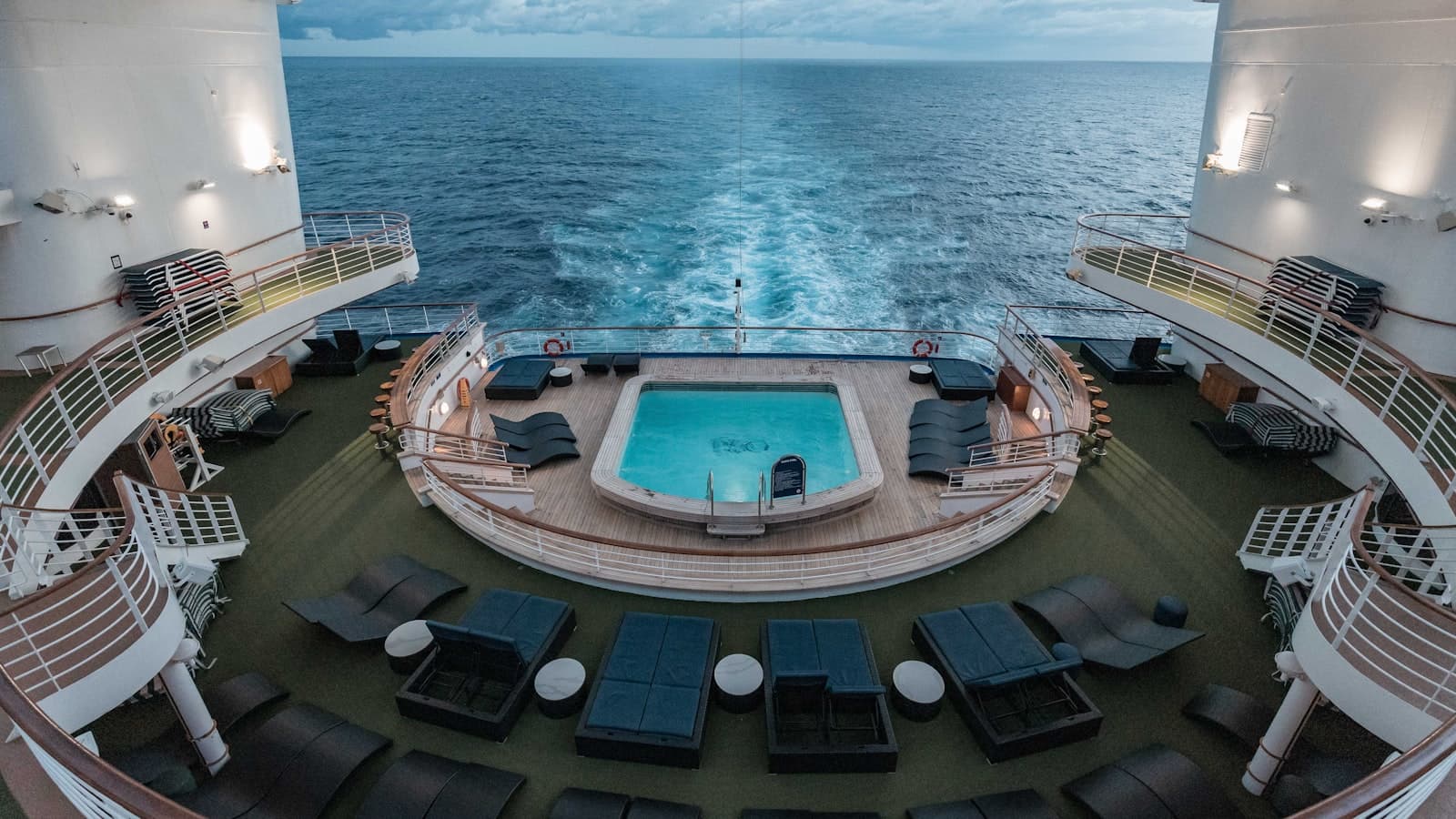
Pool rules matter. Children in diapers, including swim diapers, generally cannot use cruise-ship pools or hot tubs; only ships with a designated infant water-play area may offer an alternative. Verify that feature by ship, not merely by cruise line. A shaded promenade, indoor lounge, or quiet observation area can be just as valuable as a splash zone when a little one needs low-key time.
Book a Cabin That Supports Sleep
A few extra square feet can change the whole trip. Confirm the cabin’s maximum occupancy, crib placement, bed configuration, shower or tub setup, and whether the stroller can be stored without blocking the doorway. A balcony can give adults somewhere to talk while a child naps, but it requires constant supervision and careful use of locks and furniture. A larger ocean-view cabin may be the better value.
Study the deck plan before selecting a room. Avoid cabins beneath the pool deck, theater, nightclub, galley, or other late-night venue. Midship locations can reduce long stroller walks and may feel more comfortable in motion. Connecting cabins help larger families, but the line must confirm the connection; two rooms shown side by side are not necessarily connecting.
Plan Feeding and Diaper Logistics
Tell the cruise line in advance about formula, refrigeration, food allergies, purees, or other feeding needs. Ask what may be brought aboard, whether factory-sealed baby food is permitted, and what equipment is available. Policies on bottle warmers, kettles, sterilizers, coolers, and distilled water vary, and some heating devices are prohibited. Pack enough familiar supplies for travel delays rather than assuming a port shop will carry the same brand.
Bring more diapers, wipes, cream, swim diapers, disposable bags, and medication than the sailing itself requires. Ship stores have limited inventory and may not stock your size. A compact changing mat, stain remover, night-light, a few clothespins, and hand-wash detergent earn their space. Laundry availability and pricing vary by ship.
Use a Flexible Daily Rhythm
Protect one dependable nap instead of trying to attend everything. Early dining or flexible dining often works better than a long late seating. On embarkation day, keep medication, diapers, food, spare clothes, and sleep essentials in a carry-on because checked bags may not reach the cabin for several hours.
Do a short ship walk together on the first day: locate the youth area, quiet spaces, medical center, elevators, and easiest route to dining. Elevators are busiest after shows and when guests return from port, so a lightweight stroller can be easier than a large travel system. Never leave a stroller in the corridor, where it can obstruct an evacuation route.
Make Port Days Smaller
With little travelers, a successful port day may be a shaded beach for two hours rather than an eight-hour tour. Check car-seat availability, minimum ages, bathroom access, walking surfaces, shade, and whether a tender boat is involved. Cruise-line transportation does not always provide child restraints, and rules vary by country and vehicle. Bring an appropriate restraint when feasible and never assume a tour can safely accommodate an infant.
It is also fine to stay aboard. The ship is quieter on many port days, although nurseries and restaurants may keep different hours. If adults plan to leave the ship while a child remains in care, confirm that the program permits it; many do not.
Build in a Safety Margin
Pack prescriptions in original labeled containers and carry a basic supply kit recommended by your pediatrician. Ship medical centers provide urgent and emergency support, but they are not substitutes for a pediatric practice and care is normally billed separately. Travel insurance should address trip interruption, treatment abroad, and medical evacuation. Arriving near the port at least a day early also protects the family from a missed sailing after a flight delay.
Ben’s Travel can compare the details that matter with a very young child—infant-age rules, nursery options, cabin layouts, water-play facilities, and realistic port days—then help you choose a sailing that fits your family’s actual routine.